
Zelensky Returns Poland's Highest Honor Following Award Withdrawal
Ukrainian president Zelensky returns Poland's highest honor after it was stripped, signaling openness to dialogue about shared historical disputes between natio...
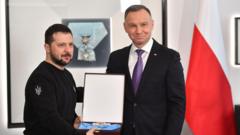
Ukrainian Leader Restores Top Polish Decoration Amid Diplomatic Tensions
Ukraine's president has made the significant decision to return Poland's highest honor following its removal, marking an important moment in the complex relationship between the two neighboring nations. This action by Zelensky regarding the Polish award demonstrates a willingness to engage constructively despite underlying tensions.
Commitment to Historical Dialogue and Understanding
In his statement addressing the situation surrounding the decoration, Ukraine's leader expressed his nation's readiness to participate in meaningful conversations about what he characterized as "difficult and painful chapters of our shared past." The president's willingness to confront these sensitive historical matters reflects a broader commitment to fostering genuine reconciliation between Kyiv and Warsaw.
The Polish award honors system holds considerable symbolic weight in Central European diplomacy, making any action involving such decorations a matter of diplomatic significance. By choosing to return the highest honor, Zelensky has sent a clear message about prioritizing dialogue over prolonging disputes.
Context of Bilateral Relations
The decision to strip and subsequently return this distinction underscores the occasionally fraught nature of Polish-Ukrainian relations, despite their shared interests as neighboring European nations facing common security challenges. Both countries have found themselves navigating complex historical narratives that occasionally create friction in their diplomatic interactions.
Ukraine's president positioned the return of Poland's highest honor not as a defeat or capitulation, but rather as an opening for substantive engagement. This framing suggests that both nations recognize the importance of addressing historical grievances directly rather than allowing them to fester beneath diplomatic protocols.
Engagement Framework for Resolving Historical Issues
The approach advocated by the Ukrainian leader involves creating structured opportunities for discussing the sensitive periods that have shaped both nations' experiences. Rather than avoiding these "difficult and painful chapters," the Polish award's return signals acceptance of the necessity for honest historical reckoning.
Such diplomatic gestures often carry implications far beyond their immediate symbolic value. In this instance, Zelensky's action regarding the Polish award represents a strategic choice to prioritize partnership and mutual understanding at a time when Eastern European stability depends on strong intra-regional relationships.
Implications for Future Cooperation
The president's statement about openness to engagement suggests that Ukraine remains committed to developing deeper ties with Poland despite previous misunderstandings. This perspective proves crucial for maintaining the unified front that Central European nations have attempted to present in response to broader regional security concerns.
By accepting the return of Poland's highest honor as a meaningful symbolic act, both nations appear to be signaling their desire to move past episodes of tension. The willingness to discuss shared history openly, rather than relegating it to the realm of unspoken grievances, could provide a foundation for more robust cooperation in areas of mutual interest.
Looking Forward: Strengthening Bonds Through Historical Honesty
The decision surrounding this Polish award demonstrates that even neighboring nations with complicated histories can find pathways toward improved relations through commitment to dialogue. Ukraine's president has positioned his country as willing participant in these necessary conversations, potentially setting a precedent for how regional tensions might be addressed constructively.
As both nations continue navigating complex geopolitical circumstances, the ability to engage honestly about "difficult and painful chapters" of their past may prove essential for maintaining the kind of bilateral cooperation that benefits the broader stability of the region. The return of Poland's highest honor thus represents more than ceremonial restoration; it symbolizes a commitment to working through historical complexities that have periodically strained the relationship between Kyiv and Warsaw.


