
Warsh Launches Fed Review at Inaugural Gathering
Kevin Warsh presides over Federal Reserve's first meeting, maintaining interest rates at 3.5%-3.75% while planning comprehensive institutional review.
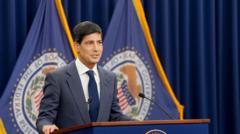
Warsh Presides Over Federal Reserve's Inaugural Session
Kevin Warsh convened his first official gathering as Federal Reserve chairman, where policymakers deliberated on monetary policy during a critical economic moment. The central bank's leadership team made the decision to maintain the benchmark federal funds rate within the 3.5% to 3.75% range, signaling continuity in the institution's approach to inflation management and economic stability.
This inaugural session under Warsh's stewardship represents a significant transition for the nation's most influential financial institution. The decision to hold Federal Reserve interest rates steady reflects the committee's assessment of current economic conditions and the persistent need for a measured approach to monetary policy.
Continuity in Monetary Policy Direction
The Federal Reserve's choice to keep interest rates unchanged demonstrates the institution's commitment to allowing previous policy adjustments to fully permeate through the economy. By maintaining the rate corridor at 3.5% to 3.75%, the committee acknowledged that the cumulative effect of rate increases implemented over the preceding months continues to influence borrowing costs, inflation trajectories, and broader economic activity.
Warsh's initial decision aligns with expectations held by market participants and economic analysts who anticipated a pause in rate movements. This measured stance provides clarity to financial markets and allows corporations and consumers time to adapt to the prevailing interest rate environment.
Warsh's Comprehensive Institutional Review Agenda
Beyond the immediate interest rate decision, Warsh signaled intentions to undertake a thorough examination of how the Federal Reserve operates as an institution. This comprehensive review encompasses the central bank's structural frameworks, decision-making processes, and operational protocols that guide monetary policy implementation.
The incoming chairman's commitment to scrutinize the Federal Reserve's internal mechanisms reflects broader conversations about institutional efficiency and effectiveness. Such reviews occur periodically within central banking circles, ensuring that organizational structures remain optimized for their core missions of price stability, maximum employment, and financial system stability.
Strategic Focus on Federal Reserve Operations
Warsh's announcement regarding an operational review suggests a forward-looking approach to central banking leadership. Understanding how various departments coordinate, how information flows through the institution, and how decisions translate into concrete policy outcomes represents essential groundwork for any new administration at the Federal Reserve.
This examination may encompass communication strategies, staff organizational structures, technological infrastructure, and the mechanisms through which regional Federal Reserve banks coordinate with the Board of Governors in Washington. The review could identify opportunities for enhanced efficiency without compromising the institution's independent mandate.
Market Response and Economic Implications
The Federal Reserve's rate decision and Warsh's signaled review objectives provided reassurance to financial markets concerned about potential policy disruptions. By maintaining existing interest rates, the central bank demonstrated consistency in execution, while the review announcement indicated thoughtful stewardship focused on long-term institutional health.
Economic observers note that the steady interest rate policy allows ongoing transmission mechanisms to influence credit markets, investment decisions, and consumer spending patterns. The current rate range remains elevated compared to pre-pandemic levels, continuing to exert moderating pressure on demand across the economy.
Significance of Warsh's Leadership Transition
Kevin Warsh brings extensive experience in financial markets and monetary policy to his role as Federal Reserve chairman. His previous tenure as a Federal Reserve Board governor, combined with his background in investment management, positions him to lead the institution through evolving economic challenges and structural considerations.
The combination of policy continuity through rate maintenance and organizational review demonstrates Warsh's balanced approach to leadership. Rather than implementing immediate dramatic changes, he has chosen to evaluate current operations while maintaining stability in the monetary policy stance that affects millions of borrowers and savers throughout the United States.
Looking Forward: Federal Reserve Priorities
With the foundational meeting completed and interest rate guidance established, Warsh's Federal Reserve enters a phase of evaluation and potential refinement. The comprehensive review of institutional operations will likely unfold over coming months, with findings potentially informing future policy approaches and organizational adjustments.
The maintenance of the 3.5% to 3.75% interest rate range establishes a known policy baseline while structural examinations proceed internally. This measured tempo reflects the complexity inherent in central banking, where institutional stability and careful deliberation often accompany decisive action.


