
Venezuela Earthquake Rescuers Search Rubble for 188+ Victims
Rescue operations continue in Venezuela following powerful earthquakes with magnitudes exceeding 7.0. Nearly 1,500 injured reported in this major disaster.
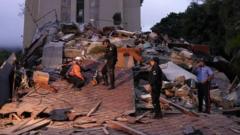
Venezuela Earthquake Leaves Hundreds Dead and Thousands Injured
A devastating Venezuela earthquake sequence has claimed at least 188 lives, with rescue teams working around the clock to locate survivors beneath collapsed structures. The disaster struck when two powerful quakes, each measuring magnitude 7.0 or greater, struck seconds apart, unleashing unprecedented destruction across multiple regions.
Emergency responders are intensifying their search and rescue efforts in the aftermath of the Venezuela earthquake, navigating through extensive rubble fields as they work to locate trapped individuals. Preliminary assessments indicate that nearly 1,500 people sustained injuries ranging from minor wounds to critical conditions requiring immediate medical attention.
Magnitude and Impact of the Seismic Event
The dual seismic waves that characterized this Venezuela earthquake created compounding effects that devastated infrastructure and residential areas. Shallow-depth quakes of this magnitude typically cause more surface-level damage compared to deeper seismic events, resulting in widespread building collapses and infrastructure failures.
Authorities have established emergency response centers throughout affected zones, coordinating medical personnel, structural engineers, and rescue volunteers. The back-to-back nature of the earthquake sequence presented unique challenges for response teams, as the second tremor destabilized structures already weakened by the initial shock.
Rescue and Recovery Operations Ongoing
Search and rescue teams continue methodically examining rubble sites where the Venezuela earthquake caused the most severe structural damage. Trained canine units assist in locating survivors, while heavy machinery carefully removes debris to prevent secondary collapses that could endanger both survivors and rescue workers.
Medical facilities across the region have activated emergency protocols to handle the influx of injured patients. Hospitals report overwhelming demand for emergency services, with surgical teams working extended shifts to address critical injuries sustained during the Venezuela earthquake. Blood banks have issued urgent calls for donations to support transfusion requirements.
International Support and Relief Efforts
The international community has mobilized assistance following the Venezuela earthquake disaster. Neighboring countries and international organizations are deploying medical personnel, rescue equipment, and humanitarian aid to support ongoing relief operations.
Telecommunications infrastructure damage from the Venezuela earthquake has complicated coordination efforts, with authorities working to restore communication systems in isolated communities. This disruption has temporarily hindered the distribution of supplies and information regarding missing persons.
Ongoing Assessments and Future Preparedness
Seismic experts are conducting detailed assessments of the Venezuela earthquake sequence to better understand the geological factors that contributed to the dual tremors. Scientists continue monitoring aftershock activity, as secondary seismic events frequently follow major earthquakes and could pose additional risks to unstable structures.
The Venezuela earthquake has prompted discussions regarding updated building code enforcement and seismic safety improvements across the region. Structural assessments of thousands of buildings are underway to determine which structures remain safe for occupancy and which require demolition or extensive repairs.
As rescue operations continue in the days following the Venezuela earthquake, the focus remains on locating missing persons and providing humanitarian assistance to displaced populations. Recovery from this catastrophic event will require sustained international support and long-term reconstruction efforts.


