
US Launches Unprecedented Economic Isolation Campaign Against Iran
The US Treasury Secretary Scott Bessent announces the most severe financial offensive against Iran, threatening economic isolation for nations engaging with Teh...
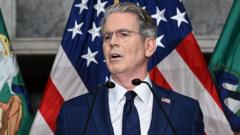
Unprecedented Financial Offensive Against Iran Announced
The United States government has initiated what officials describe as the most comprehensive economic isolation campaign against Iran in decades. Scott Bessent, serving as Treasury Secretary, has declared that the administration will implement sweeping measures to sever all economic ties with the Islamic Republic, marking a significant escalation in international financial pressure against Tehran.
This Iran economic sanctions strategy represents a dramatic shift in approach, combining direct restrictions with indirect deterrents targeting third-party nations that maintain financial relationships with Iranian entities. The Treasury Secretary emphasized that the scope of this financial offensive extends beyond bilateral restrictions, creating widespread implications for global commerce and international banking systems.
Comprehensive Strategy and Global Reach
The financial offensive encompasses multiple dimensions designed to maximize economic pressure on Iran. Treasury officials have signaled that the administration will employ executive authority and existing legislative frameworks to implement restrictions across various sectors of the Iranian economy, including energy, banking, shipping, and manufacturing industries.
A critical component of this approach involves threatening secondary sanctions against international partners. Any nation, corporation, or financial institution that engages in substantial economic activity with Iran faces potential isolation from American markets and financial systems. This extraterritorial application of sanctions pressure represents an evolution in Washington's enforcement strategy, leveraging the centrality of the US dollar in global commerce as a coercive tool.
Implications for International Banking
The Treasury Secretary's announcement carries profound consequences for international financial institutions. Banks conducting Iran-related transactions may face account closures, transaction denials, and exclusion from dollar-based settlement systems. This framework effectively pressures foreign governments and multinational corporations to choose between maintaining Iranian business interests or preserving access to American financial networks.
Financial institutions across Europe, Asia, and the Middle East have begun reassessing their exposure to Iran-related activities. Many international banks have already implemented stricter compliance protocols and reduced their Iranian business portfolios in anticipation of enhanced enforcement mechanisms announced through this financial offensive initiative.
Strategic Objectives and Stated Goals
According to Treasury Department statements, the primary objective involves compelling Iran to fundamentally alter its regional behavior and foreign policy positioning. American officials contend that comprehensive economic isolation will pressure Iranian leadership into negotiations regarding nuclear capabilities, missile programs, and support for regional proxy forces.
The administration has framed this Iran economic sanctions campaign as necessary for regional stability and international security. Officials argue that without comprehensive financial pressure, diplomatic negotiations lack sufficient leverage to achieve substantive agreements with Tehran on issues deemed critical to American national interests and allied security commitments.
Global Economic Ripple Effects
International economists warn that the sweeping nature of this financial offensive may create broader market disruptions. Oil markets particularly face uncertainty, given Iran's significant petroleum production capacity and the potential for sanctions-driven supply constraints. Energy prices could experience volatility as the financial offensive moves toward implementation.
Nations heavily dependent on Iranian trade relationships have expressed concerns about the extraterritorial enforcement mechanisms inherent in this sanctions strategy. Countries including China, India, and Turkey have maintained significant economic relationships with Iran and could face difficult policy choices regarding compliance with American financial sanctions pressure.
Enforcement Mechanisms and Implementation Timeline
The Treasury Secretary outlined that implementation will proceed through coordinated action across multiple American government agencies. The Office of Foreign Assets Control (OFAC), responsible for sanctions administration and enforcement, will receive enhanced resources and expanded authority to monitor and prosecute violations of the financial offensive restrictions.
Treasury officials indicated that the Iran economic sanctions framework would be rolled out in phases, beginning with sectors already subject to existing restrictions while progressively expanding coverage across remaining economic sectors. This phased approach aims to allow adjustment periods while maintaining sustained pressure throughout implementation.
International Response and Concerns
Foreign governments have responded to the Treasury Secretary's announcement with measured statements emphasizing the importance of diplomatic channels. European Union officials noted that while supporting efforts to address legitimate security concerns, comprehensive financial isolation could undermine prospects for negotiated solutions.
The financial offensive announcement reflects ongoing tensions within the international community regarding optimal strategies for addressing Iran's geopolitical positioning and security capabilities. Some nations view comprehensive economic pressure as counterproductive to diplomatic objectives, while others support aggressive financial measures as necessary coercive instruments.
This unprecedented Iran economic sanctions initiative represents a defining moment in American foreign policy enforcement, combining maximum financial pressure with explicit warnings to international partners. The coming months will determine whether this comprehensive financial offensive achieves stated policy objectives or generates unintended consequences affecting broader international stability and economic relationships.


