
Ukraine's Military Strikes Force Fuel Sales Suspension in Occupied Crimea
Ukraine targets oil infrastructure in Crimea, leading to fuel sales halt. Russian-occupied territory faces severe rationing amid ongoing military strikes on sup...
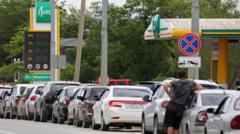
Fuel Sales Halted Across Occupied Crimea Following Strategic Attacks
The fuel sales suspension in occupied Crimea marks a significant escalation in Ukraine's military campaign targeting critical energy infrastructure in Russian-held territories. Authorities in the peninsula have announced a complete halt to commercial fuel distribution, creating unprecedented challenges for civilians and military operations alike. This fuel sales suspension represents one of the most severe disruptions to energy supply since the territorial dispute intensified.
Impact of Ukraine's Strategic Military Operations
Ukraine's coordinated military strikes have systematically targeted oil facilities and distribution networks serving the occupied region. These precision attacks on energy infrastructure have effectively dismantled the supply chain that previously sustained fuel availability. The fuel sales suspension follows months of calculated targeting of refineries, pipelines, and storage facilities that formed the backbone of Russia's energy operations in Crimea.
Existing Rationing Crisis Worsens the Situation
Prior to the complete fuel sales suspension, residents and businesses already endured severe rationing measures. Kyiv's attacks against supply routes coursing through Russian-occupied territories had created bottlenecks that limited fuel distribution significantly. The restriction of these vital transportation corridors meant that even limited quantities of fuel could not reach end consumers reliably. This progressive degradation of supply capacity ultimately forced authorities to halt sales entirely rather than manage an unsustainable rationing system.
Root Causes of Supply Route Disruption
Ukraine's military strategy has focused on severing connections between fuel production centers and distribution points. By targeting the infrastructure connecting supply sources to occupied territories, Ukrainian forces have created a situation where fuel physically cannot reach the peninsula in meaningful quantities. Supply routes that once moved petroleum products through Russian-controlled logistics networks have become increasingly vulnerable to attack, forcing dramatic reductions in flow capacity.
Humanitarian and Economic Consequences
The fuel sales suspension creates cascading problems throughout the occupied territory's economy. Transportation services face immobilization, agricultural operations cannot function, and heating systems for residential buildings lack the necessary resources. Small businesses dependent on fuel access have shuttered operations, while hospitals and emergency services struggle to maintain generator-powered backup systems. The broader economic impact extends beyond mere inconvenience, threatening basic services that civilian populations depend upon daily.
Military Implications for Russian Operations
The fuel sales suspension also complicates military logistics for Russian forces maintaining positions in Crimea. Vehicles, aircraft, and heating systems for forward bases all require fuel that is now unavailable through normal channels. This constraint forces Russian command to redirect supplies from other operational areas or rely on increasingly risky maritime transport options vulnerable to Ukrainian interdiction.
Strategic Context Within the Larger Conflict
Ukraine's targeting of oil facilities represents a calculated strategy to degrade Russian capability while avoiding direct confrontation with superior conventional forces. By attacking the energy infrastructure supporting occupation, Ukrainian forces multiply the costs of maintaining territorial control. The fuel sales suspension demonstrates the effectiveness of this approach in creating real hardship for both military and civilian populations in occupied areas.
Outlook and Potential Developments
The fuel sales suspension may continue indefinitely unless Russia successfully repairs damaged infrastructure or establishes new supply routes around Ukrainian strike zones. Current trends suggest that repeated targeting of reconstruction efforts will perpetuate shortages. Whether civilian authorities implement new distribution mechanisms or whether the fuel sales suspension remains complete depends on the military situation's evolution and the relative success of competing repair and interdiction operations.


