
Trump Threatens Additional Canada Tariffs Over Wildfire Smoke Pollution
Trump warns of new tariffs on Canada amid wildfire smoke concerns affecting US cities. Climate experts link worsening fires to environmental changes.
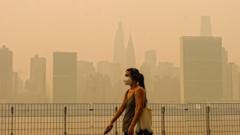
Trump Administration Issues Tariff Warning Over Cross-Border Smoke Crisis
The Trump administration has escalated trade tensions by threatening additional Canada tariffs in response to wildfire smoke crossing into United States territory. The contentious issue centers on atmospheric pollution originating from Canadian wildfires, which experts attribute to deteriorating climate conditions affecting air quality across multiple American cities.
Mark Carney's Climate Change Position
Canadian leader Mark Carney has responded to the tariff threats by asserting that both nations share equal responsibility in combating climate change. Carney emphasizes that the transnational nature of environmental challenges requires coordinated policy approaches rather than punitive trade measures. His statement reflects Canada's position that wildfire management transcends borders and demands collaborative solutions.
Expert Analysis on Wildfire Intensification
Scientific researchers have established clear connections between climate change and the escalation of wildfire severity and frequency. Climate scientists note that rising temperatures create conditions favorable for more intense fires that burn larger areas and produce substantial quantities of smoke. These environmental shifts have profound implications for air quality management in North American populations, particularly those residing in proximity to forested regions.
Cross-Border Air Quality Concerns
The movement of smoke particles across international borders presents a significant public health challenge for affected American communities. Residents in numerous US cities have experienced degraded air quality resulting from Canadian wildfire emissions. This phenomenon illustrates how environmental crises recognize no political boundaries, creating diplomatic complexities when one nation's natural disasters impact another's population health and economic interests.
Trade Policy vs. Environmental Strategy
The Trump administration's approach of leveraging tariff mechanisms represents a departure from traditional environmental diplomacy. Critics argue that trade restrictions fail to address underlying climate factors driving increased wildfire activity. Instead, stakeholders advocate for integrated continental strategies focusing on forest management, emission reduction, and climate adaptation initiatives that would prove more effective than punitive economic measures.
Future Implications for US-Canada Relations
This dispute highlights growing tensions between economic policy and environmental governance in North American trade relations. The controversy underscores how natural disasters increasingly influence diplomatic negotiations and commercial agreements between neighboring nations. Whether both countries will pursue collaborative environmental frameworks or continue escalating trade conflicts remains uncertain as wildfire seasons persist with unpredictable intensity patterns.


