
Infantino Stands Firm Amid European Backlash Over Trump Intervention
Gianni Infantino remains unfazed by European criticism regarding Trump intervention and the Folarin Balogun controversy in his FIFA presidency.
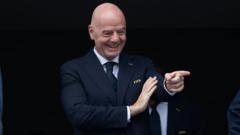
Infantino Remains Resilient Despite Growing European Opposition
The Infantino Trump intervention saga has sparked considerable controversy across European football circles, yet FIFA President Gianni Infantino shows little sign of wavering in his position. After a decade steering world football's governing body, the Swiss administrator has weathered numerous storms, and this latest challenge appears unlikely to fundamentally alter his trajectory within the organization.
The backlash from European nations demonstrates how deeply political considerations now permeate international football governance. However, observers of FIFA's internal dynamics suggest that Infantino has constructed sufficient political capital and institutional support to navigate even this turbulent period without significant consequence to his authority or tenure.
The Balogun Controversy: A Catalyst for Broader Concerns
The Folarin Balogun situation has emerged as a focal point for criticism regarding external political interference in football matters. The English footballer's case has galvanized European football federations, raising fundamental questions about FIFA's autonomy and decision-making processes. Yet despite these legitimate concerns, the structural advantages Infantino enjoys within FIFA's institutional framework suggest that European opposition alone may prove insufficient to dislodge him.
Balogun's circumstances highlight the intersection of national politics and sporting governance—a realm where Infantino has demonstrated considerable skill in managing competing interests. The president's ability to balance stakeholder concerns while maintaining his operational control has been central to his longevity in office.
Assessing Infantino's Political Capital
Over ten years in office, Gianni Infantino has cultivated relationships across multiple FIFA constituencies. His support extends beyond Europe, encompassing powerful voting blocs from Africa, Asia, and the Americas. This geographically diverse coalition provides him with a formidable foundation that transcends any single regional opposition.
The Trump intervention dimension adds complexity to the narrative, introducing elements of broader geopolitical tension into football governance. Nevertheless, Infantino has historically positioned FIFA as a neutral actor capable of maintaining operational independence despite external pressures. His communications strategy emphasizes FIFA's commitment to its statutory obligations rather than responding directly to political demands.
European Influence Within FIFA's Structure
While European federations command considerable influence within FIFA's governance structures, their power remains circumscribed by the democratic voting systems that govern major organizational decisions. The European football confederation represents substantial interests, but constitutional reforms and voting mechanisms implemented during Infantino's tenure have deliberately distributed power more widely across regions.
This strategic restructuring, ostensibly designed to enhance global representation, simultaneously dilutes the concentrated power European federations previously wielded. The irony is not lost on critics who view the architectural changes as fundamentally constraining their ability to challenge FIFA leadership unilaterally.
Looking Forward: Continuity Over Change
The cumulative effect of these structural, political, and diplomatic factors suggests that the current backlash, despite its intensity, likely lacks the institutional mechanisms necessary to precipitate Infantino's removal or substantive policy reversal. European nations may secure rhetorical victories or minor concessions, but the fundamental equation appears tilted toward continuity.
The trajectory of Infantino's presidency indicates that external criticism, regardless of its geographic origin or political legitimacy, has not historically succeeded in substantially constraining his decision-making authority. As this latest controversy evolves, the established patterns suggest that Infantino will maintain his institutional position while managing the diplomatic dimensions of the dispute.


