
Farage's Clacton Rivals Reject By-Election Candidacy
Reform UK leader Nigel Farage faces isolation as competitors withdraw from Clacton by-election. Labour denounces the contest as a political circus.
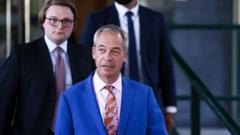
Farage Stands Alone in Clacton Showdown
The Clacton by-election has become a defining moment in British politics as Nigel Farage confronts a remarkably unified opposition. Major political contenders have systematically withdrawn their candidacies, leaving the Reform UK leader to frame the upcoming contest as a fundamental clash between establishment forces and ordinary citizens. However, the Labour Party has dismissed the entire affair as nothing more than a theatrical distraction from substantive policy debates.
This unprecedented scenario underscores the deep divisions within contemporary British politics and raises critical questions about the nature of electoral competition and democratic participation. The by-election, originally triggered by unexpected parliamentary circumstances, has evolved into something far more significant than a routine constituency contest.
The Strategic Withdrawal of Competitors
Political analysts have observed a coordinated pattern of candidate withdrawals across multiple parties. Prominent figures who might ordinarily contest such elections have decided to step back from the Clacton by-election arena. This collective decision reflects broader calculations about electoral viability and strategic positioning within the competitive landscape.
The reasons cited for these withdrawals vary among the different political camps. Some candidates pointed to the polarized nature of the contest and its potential distraction from other pressing legislative matters. Others indicated that the particular dynamics of the Clacton constituency made their participation counterproductive to their respective party strategies.
Farage's Vision of Popular Uprising
Nigel Farage has consistently articulated his interpretation of the upcoming by-election as something unprecedented in modern British electoral history. According to the Reform UK leader, this contest represents a direct confrontation between entrenched establishment interests and the genuine voice of everyday people demanding substantive change. Farage's messaging emphasizes themes of democratic renewal and liberation from what he characterizes as self-serving political structures.
The framing resonates with core constituencies that have felt alienated from traditional political institutions. By positioning himself as an outsider challenging the system, Farage attempts to mobilize supporters who perceive government institutions as disconnected from their daily concerns and aspirations. This narrative has proven effective in mobilizing protest votes and drawing media attention to his political movement.
Labour's Dismissal and Political Response
The Labour Party has adopted an entirely different perspective on the Clacton by-election, characterizing it as a circus designed primarily for media spectacle rather than substantive political engagement. Labour representatives argue that such contests should focus on genuine policy differences and community interests rather than serving as platforms for personalities or anti-establishment rhetoric.
This critique reflects Labour's broader strategy of distancing itself from what the party considers populist or divisive electoral tactics. By dismissing the Clacton by-election framework, Labour attempts to elevate political discourse toward issues of economic management, social services, and practical governance.
Broader Implications for British Politics
The Clacton by-election scenario offers insights into contemporary British political fragmentation and the challenges facing traditional party structures. The voluntary withdrawal of candidates suggests that several political organizations recognize they face disadvantageous circumstances in this particular contest. Such strategic calculations have become increasingly common as political competition intensifies.
Furthermore, this situation illustrates the growing polarization between establishment-oriented political forces and anti-establishment movements. The Reform UK narrative, amplified through Farage's leadership, has successfully positioned itself as representing genuine popular sentiment against what it portrays as disconnected elites and institutionalized interests.
Media Coverage and Public Perception
Media outlets have provided extensive coverage of the Clacton by-election dynamics, amplifying both Farage's claims about establishment resistance and Labour's criticisms of the contested framing. This coverage has significantly shaped public understanding of the event, though different demographic groups consume and interpret the information through distinctly different lenses.
The competing narratives have created a complex information environment where citizens must navigate contradictory claims about the election's significance and meaning. Some voters view it as a crucial moment for democratic accountability, while others regard it as political theater designed to distract from substantive issues.
Conclusion: Democracy in Contested Territory
The Clacton by-election represents a microcosm of larger tensions within British democracy. As traditional parties struggle with declining institutional trust and newer political movements challenge conventional structures, electoral contests increasingly become battlegrounds for fundamentally different visions of how democracy should function. Whether viewed as genuine popular uprising or political spectacle, this by-election will likely influence political strategy and public discourse for years to come.


