
Emergency EU Summit Addresses Ceuta Migrant Crisis Urgently
The European Union convenes emergency talks to address escalating migrant crossings in Ceuta. Spain and EU nations debate immigration policies amid rising tensi...
Emergency EU Summit Addresses Ceuta Migrant Crisis Urgently
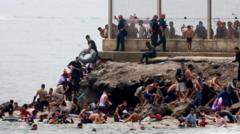
The European Union has called an urgent emergency meeting to tackle the pressing issue of Ceuta migrant crossings, as tensions escalate between Spain and fellow EU member states. The gathering represents a critical moment for European policymakers to coordinate responses to the humanitarian and security challenges emerging from this Spanish North African enclave.
Understanding the Ceuta Situation
Ceuta, a strategic Spanish territory on the northern coast of Morocco, has become a focal point for migration flows into Europe. The autonomous city, positioned just across from Morocco, faces unprecedented pressure as migrants attempt to reach European soil through its borders. This geographical position makes Ceuta migrant crossings a significant concern for both Spanish authorities and broader European immigration management.
The enclave's unique status as Spanish territory in Africa creates complex administrative and enforcement challenges. Located merely kilometers from Morocco, Ceuta serves as a gateway that attracts migrants seeking entry to the European Union, particularly those departing from Sub-Saharan Africa and other regions experiencing economic hardship or political instability.
Rising Tensions Between Spain and EU States
Heated diplomatic exchanges have emerged between Spain and other European Union nations regarding how to manage the influx of migrants entering Ceuta. Spanish officials have expressed frustration over what they perceive as insufficient support from fellow EU members in addressing the migration surge, while other states debate the appropriate burden-sharing mechanisms for handling displaced populations.
These tensions reflect deeper disagreements within the European Union about immigration policy, asylum procedures, and responsibility distribution among member states. Spain, as the primary country experiencing direct impact from Ceuta migrant crossings, argues for comprehensive EU-wide solutions rather than bilateral arrangements. Meanwhile, other nations maintain varying positions on immigration intake and border security protocols.
EU's Emergency Response Framework
The emergency meeting convened by EU leadership demonstrates the organization's commitment to addressing this crisis through coordinated action. European Union representatives recognize that migration challenges require multilateral cooperation, particularly when specific regions become overwhelmed by migratory flows.
During discussions, EU officials are expected to examine several critical areas: border security enhancement, asylum processing acceleration, cooperation with North African nations, and resource allocation for affected member states. The framework aims to balance humanitarian obligations with practical security concerns and legitimate immigration management.
International Cooperation and Moroccan Relations
Resolving Ceuta migrant crossings requires not only intra-EU coordination but also constructive engagement with Morocco. As the nation directly across from Ceuta, Morocco plays an essential role in controlling departure points and managing migrants on its territory. EU-Spain delegations are exploring enhanced diplomatic channels and cooperative agreements with Moroccan authorities.
Such partnerships could include improved border monitoring, joint patrols, information sharing systems, and economic incentives for Morocco to enforce stricter emigration controls. Historical precedent shows that sustained bilateral cooperation yields more sustainable results than unilateral enforcement measures.
Long-term Policy Solutions
Beyond immediate crisis management, the emergency meeting addresses fundamental questions about European immigration policy architecture. EU policymakers recognize that ad-hoc responses prove insufficient for managing persistent migration pressures into Ceuta and other European entry points.
Sustainable solutions require addressing root causes of migration in source countries through development initiatives, conflict resolution, and humanitarian assistance in regions experiencing crisis. Simultaneously, the EU must establish clearer asylum frameworks, standardize processing procedures across member states, and create legal pathways for migration that reduce dangerous irregular crossings.
Humanitarian and Security Balance
Central to ongoing discussions is maintaining equilibrium between humanitarian principles and security imperatives. The European Union remains committed to international asylum conventions while recognizing legitimate concerns about uncontrolled migration flows and their impact on social services, housing, and employment in receiving communities.
Policymakers acknowledge that migrants themselves—often fleeing persecution, violence, or extreme poverty—deserve dignified treatment and fair asylum determinations. However, orderly migration processes better serve both migrants' interests and host countries' capacity for integration and service provision.
Looking Forward
The emergency EU meeting on Ceuta migrant crossings marks a turning point in European immigration governance. Decisions reached during these discussions will shape how the Union manages border security, processes asylum claims, and cooperates with neighboring nations for years to come. Success requires political will, financial resources, and genuine commitment from all EU member states to shared responsibility and coordinated action.


