
Earthquake Aftermath Leaves Venezuelans Struggling Without Aid Support
Twin earthquakes devastate Venezuela as survivors face critical challenges without government assistance. Communities use makeshift tools to rescue those trappe...
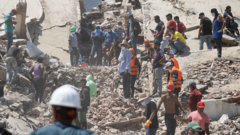
Devastating Seismic Events Leave Venezuelan Communities in Crisis
The aftermath of powerful seismic activity has created unprecedented challenges for earthquake Venezuela survivors across affected regions. As rescue efforts intensify, many residents find themselves confronting the harsh reality of minimal institutional support, forcing communities to rely on improvised solutions and neighborly cooperation to locate and extract those trapped beneath the rubble.
Grassroots Rescue Efforts Emerge as Official Response Falters
In heavily impacted areas, the absence of coordinated disaster relief has prompted ordinary citizens to become frontline rescuers. Residents are utilizing crowbars, pickaxes, and manual labor to systematically search through collapsed structures. These makeshift rescue teams, lacking professional equipment and training, demonstrate remarkable determination as they work around the clock to access survivors pinned under debris.
Community Mobilization Without Resources
The scale of destruction following the twin earthquakes has overwhelmed local capacities. Families organize their own search parties, sharing tools and information about potential survivor locations. Many neighborhoods have established informal coordination systems, with residents taking shifts to maintain continuous rescue operations through day and night. This grassroots approach, while demonstrating human resilience, also highlights critical gaps in emergency preparedness and governmental response mechanisms.
Challenges Facing Trapped Survivors and Rescuers
Time remains the most critical factor for trapped individuals. As hours pass, survival chances diminish significantly. Rescuers face mounting obstacles including unstable structures, limited visibility in debris, and physical exhaustion from manual labor. The psychological toll on both survivors and rescue workers intensifies as reality sets in regarding the scope of destruction and loss of life.
Equipment Shortages Hamper Rescue Progress
Professional rescue operations typically utilize specialized detection equipment, hydraulic extraction tools, and trained personnel. However, affected Venezuelan regions lack these essential resources. Communities must improvise with basic hand tools and construction equipment, significantly slowing rescue operations and increasing dangers to both victims and rescuers attempting dangerous extractions from unstable rubble.
Government Response and International Assistance
As the earthquake Venezuela disaster unfolds, questions mount regarding institutional response adequacy. Aid coordination remains fragmented, with limited visibility into official rescue resource deployment. International humanitarian organizations stand ready to provide assistance, yet logistical barriers and political complications create delays in deployment of critical supplies, medical personnel, and specialized rescue equipment desperately needed in devastated zones.
Healthcare System Under Extreme Pressure
Medical facilities within affected regions face overwhelming patient volumes with limited supplies. Injured survivors waiting for treatment compound the healthcare crisis, while rescue operations create continuous influx of trauma cases. Medical professionals work under extraordinary pressure with insufficient medications, blood supplies, and surgical capacity to address the magnitude of injuries.
Long-Term Recovery Outlook Remains Uncertain
Beyond immediate rescue operations, the path toward recovery appears daunting. Reconstruction will require substantial resources, expertise, and sustained commitment. Entire neighborhoods face potential displacement as structural assessments determine building safety. Housing shortages will become acute as displaced families search for shelter, while economic disruption threatens already vulnerable populations dependent on daily labor.
Social and Economic Ramifications
The earthquake Venezuela crisis extends far beyond immediate casualties and injuries. Families face financial devastation from destroyed homes and lost livelihoods. Business interruption affects entire communities, with small merchants losing inventory and income sources. Educational institutions suffer damage, disrupting children's learning and creating psychological trauma among younger populations.
Community Resilience and Mutual Support Systems
Despite overwhelming challenges, Venezuelan communities demonstrate extraordinary solidarity. Neighbors share limited supplies, coordinate search efforts, and provide emotional support to affected families. This human connection and collective determination represent essential survival mechanisms in situations where institutional support remains inadequate, showing communities' capacity to organize themselves effectively during catastrophic events.
Essential Needs and Ongoing Shortages
Survivors require immediate access to clean water, food, medical care, and shelter. Sanitation challenges in devastated areas create disease risks, while contaminated water supplies threaten public health. Rescue teams need continuous resupply of food and water to maintain operations, yet distribution networks remain compromised by infrastructure damage that complicated logistical support throughout affected regions.


