
Carney Labels Trump's Latest Tariffs as Major Strategic Error Following Trade Negotiations Breakdown
Canada's PM Carney condemns Trump's new tariffs as a miscalculation, announcing retaliatory measures after trade talks fail to reach agreement.
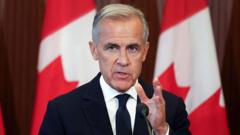
Carney Denounces Trump's Tariffs as Strategic Miscalculation
Canada's Prime Minister Mark Carney has characterized Trump's fresh tariffs as a significant strategic miscalculation following the breakdown of bilateral trade negotiations. In a forceful statement, Carney expressed deep concern over the escalating trade tensions between the two neighboring nations, underscoring how this latest round of tariffs represents a fundamental departure from constructive diplomatic engagement.
The Canadian government's response to Trump's tariffs comes after weeks of stalled negotiations aimed at resolving longstanding trade disputes between Washington and Ottawa. Carney's assessment of Trump's tariffs as misguided reflects the growing frustration within Canada's political establishment regarding the unpredictability of US trade policy and its impact on cross-border commerce.
Canada Announces Reluctant Retaliatory Measures
In a development that underscores the severity of the situation, Carney stated he was "reluctantly" announcing retaliatory tariffs in response to the American actions. This reluctant posture demonstrates Canada's preference for negotiated settlements over trade escalation, yet the nation's leadership felt compelled to take defensive action to protect domestic industries and workers.
The retaliatory tariffs represent Canada's measured but firm response to what Ottawa views as an unjustified trade action. By characterizing the announcement as reluctant, Carney emphasized that Canada did not seek this confrontation but felt obligated to defend its economic interests against what the government perceives as aggressive American protectionism.
Trade War Accusations and Escalating Tensions
Carney directly accused the United States of initiating what amounts to a trade war, a characterization that reflects the serious nature of current trade frictions. The Prime Minister's strong language signals that Canada views the situation as having moved beyond isolated trade disagreements into a broader, more systematic conflict over tariff policy and market access.
This accusation carries significant weight given Canada's historical reliance on US markets and the deeply integrated nature of North American supply chains. The notion that Trump's tariffs have triggered a trade war indicates that ordinary commercial disputes have transformed into a geopolitical struggle with far-reaching consequences for both nations' economies.
Impact on Trade Negotiations and Bilateral Relations
The collapse of trade talks represents a critical breakdown in diplomatic channels between Canada and the United States. Prior to this rupture, negotiators from both sides had engaged in discussions aimed at resolving contentious trade issues, but these efforts ultimately proved unsuccessful in preventing tariff escalation.
The failure to reach consensus during negotiations raises questions about the fundamental compatibility of current US and Canadian trade positions. Trump's decision to proceed with fresh tariffs despite ongoing discussions suggests a hardline approach that prioritizes unilateral action over collaborative problem-solving, much to the frustration of Canadian officials.
Broader Implications for Continental Trade
The tariff dispute carries implications that extend far beyond bilateral Canada-US relations. Given the integrated nature of North American manufacturing and supply chains, tariffs between the two countries have cascading effects throughout the region. Canadian industries dependent on US market access face new cost pressures, while American businesses relying on Canadian inputs confront increased input costs.
Carney's condemnation of Trump's tariffs as a miscalculation suggests the Canadian government believes this policy approach will ultimately prove counterproductive to American interests as well. By disrupting established trade relationships and supply chain networks, the tariffs risk damaging economic growth across the continent.
Canada's Strategic Response Framework
The retaliatory tariffs announced by Carney represent a calculated response designed to impose equivalent costs on American exporters. Rather than escalating dramatically, Canada's approach appears measured, focusing on sectors where tariffs can effectively signal displeasure while limiting unnecessary economic damage to Canadian consumers and businesses.
This strategic response reflects Ottawa's assessment that immediate reciprocal action is necessary to establish credibility in future negotiations. By demonstrating willingness to impose costs on American interests, Canada signals it will not passively accept unilateral tariff imposition without consequence.
Looking Forward: Uncertain Trade Prospects
The breakdown of trade negotiations and the subsequent announcement of retaliatory measures create an uncertain environment for businesses operating across the Canada-US border. Companies in both nations face questions about whether additional tariffs may follow and whether diplomatic channels might eventually reopen.
Carney's characterization of Trump's tariffs as a miscalculation, combined with Canada's reluctant announcement of retaliatory measures, suggests both nations have adopted defensive postures. Whether this situation can be de-escalated through renewed negotiations remains uncertain, but the current trajectory indicates continued trade friction between these historically close trading partners.


