Bank of England's Cautious Rate Hike May Extend Higher Rates
Niesr warns Bank of England's modest rate increase could prolong inflation above 2% target through 2030, risking extended high interest rates for UK borrowers.
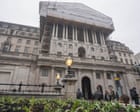
Central Bank's Measured Approach Draws Sharp Criticism
The Bank of England faces mounting pressure following its measured approach to tackling Bank of England interest rates, with leading economists warning that insufficient action could extend elevated borrowing costs across the UK economy for years to come. The National Institute of Economic and Social Research (Niesr), a prestigious independent thinktank, has issued a stark warning about the implications of the central bank's recent policy decisions.
According to Niesr's analysis, the Bank of England's restrained rate adjustment announced last week represents a critical misstep that threatens to embed price pressures into the economy for an extended period. The institution contends that this hesitant monetary policy stance will likely result in inflation remaining stubbornly above the Bank's official 2% target well into the 2030s, fundamentally altering economic conditions for households and businesses across the nation.
The Case Against Cautious Policymaking
The thinktank's critique focuses on what it describes as an overly timid response to persistent inflationary forces affecting the UK. Niesr argues that the Bank of England's incremental approach to rate increases fails to address the underlying pressures that continue to drive prices upward. Rather than implementing more aggressive measures to curtail demand and stabilize prices, the central bank appears to have opted for a gradualist strategy that may ultimately prove counterproductive.
This conservative positioning carries significant consequences for inflation control UK efforts. When central banks delay meaningful action against rising prices, expectations among businesses and consumers can become unanchored from official targets. This psychological shift creates a self-reinforcing cycle where anticipated inflation becomes embedded in wage negotiations, pricing decisions, and investment strategies, making future price stabilization progressively more difficult and costly.
Long-Term Economic Implications
The extended timeline for bringing inflation under control has profound ramifications for UK households and the broader economy. If price pressures remain elevated through the end of the current decade, the Bank of England will likely need to maintain higher interest rate forecast levels for an extended duration to eventually restore stability. This outcome would represent a substantial reversal from the decade of ultra-low rates that characterized monetary policy following the 2008 financial crisis.
Consumers facing higher borrowing costs for mortgages, auto loans, and credit card debt will experience reduced purchasing power and constrained household finances. Businesses will encounter elevated financing costs for expansion and investment projects, potentially dampening economic growth and employment creation. The cumulative effect of prolonged high rates creates a drag on the economy that extends well beyond simple borrowing constraints.
Monetary Policy Response Under Scrutiny
Niesr's assessment reflects broader concerns within the economic community about whether current monetary policy response frameworks adequately address inflationary shocks. The thinktank's position challenges the conventional wisdom that underpinned the Bank's recent decision-making, suggesting that policymakers may have misread the persistence and severity of price pressures.
The institution's analysis emphasizes that early, decisive action typically proves more effective than delayed, incremental adjustments when combating inflation. By waiting too long or moving too slowly, central banks risk allowing inflation expectations to drift higher, which subsequently requires more dramatic rate increases to restore credibility and achieve price stability. This dynamic explains why some economists advocate for preemptive rate rises even when inflation appears manageable.
Broader Economic Outlook
The trajectory outlined by Niesr carries implications extending far beyond monetary policy mechanics. The UK economic outlook depends significantly on achieving price stability within reasonable timeframes. Extended inflation above target creates uncertainty that undermines business planning, investment decisions, and consumer confidence. Industries dependent on predictable input costs and pricing power face heightened challenges when inflation remains elevated and volatile.
Moreover, prolonged inflationary conditions affect inequality and wealth distribution. Savers and fixed-income recipients suffer from eroding purchasing power, while borrowers benefit temporarily from paying back loans with depreciated currency. The longer inflation persists, the more pronounced these distributional consequences become, potentially widening economic disparities across society.
Forward-Looking Considerations
The debate surrounding the Bank of England's approach highlights fundamental questions about optimal monetary policymaking under uncertain conditions. Central banks face competing pressures: acting too aggressively risks undermining growth and employment, while moving too cautiously risks allowing inflation to become entrenched. Finding the appropriate balance requires accurate economic forecasting and timely implementation of decisions.
Niesr's warning serves as a crucial reminder that monetary policy decisions carry consequences extending far into the future. The choices made today by Bank of England policymakers will shape economic conditions, borrowing costs, and inflation dynamics for years to come. Whether markets and economists view this assessment as prescient or overly pessimistic will become clearer as inflation data and economic conditions evolve throughout the coming years.