
Artificial Ice Pyramids: India's Solution to Mountain Water Scarcity
Discover how Himalayan villages create artificial glaciers to secure water supplies for spring crops. Learn about this innovative ice pyramid technology.
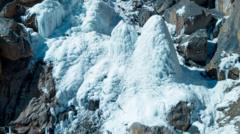
Artificial Glaciers: A Lifeline for Himalayan Communities
In the remote mountains of India, artificial glaciers have emerged as a transformative solution to address critical water shortages that threaten agricultural productivity. These innovative artificial glaciers, commonly known as ice pyramids, represent a remarkable adaptation strategy developed by mountain communities facing increasingly severe water availability challenges during the growing season.
The concept of artificial glaciers operates on a straightforward yet ingenious principle: capturing winter water that would otherwise flow away and allowing it to freeze in controlled conditions. This frozen water then slowly melts during spring and early summer months, precisely when farmers need it most for irrigation. What makes this approach particularly valuable is its timing—it addresses the fundamental mismatch between water availability in winter and water demand in spring.
How Artificial Glaciers Transform Mountain Agriculture
Himalayan villages have been implementing artificial glacier systems that collect winter runoff and freeze it into massive ice blocks. These ice structures are strategically positioned at high altitudes where freezing temperatures persist throughout winter and gradually warm during spring. The melting process is naturally calibrated to release water exactly when agricultural activities intensify.
Local farmers and community leaders in these villages have found that artificial glaciers provide several critical advantages. First, they reduce dependency on unpredictable monsoon patterns and irregular precipitation. Second, they utilize existing water resources more efficiently by preventing waste during winter months. Third, they create a natural storage system that requires minimal maintenance once established.
Engineering Innovation in Remote Locations
The construction of artificial glaciers involves careful planning and engineering expertise adapted to harsh mountain environments. Communities work with water management specialists to identify optimal locations where winter temperatures remain cold enough for sustained ice formation. The systems typically incorporate channels and structures that direct water flow toward designated freezing zones.
The ice pyramids themselves often measure tens of meters in height and can store millions of liters of water in frozen form. Engineers design these structures to maximize surface area for even freezing while ensuring structural stability throughout the winter season. The construction materials are typically locally sourced, making the technology accessible to remote communities with limited resources.
Impact on Local Agricultural Systems
The introduction of artificial glaciers has transformed agricultural capabilities in previously water-stressed regions. Farmers can now plan crop calendars with greater confidence, knowing that irrigation water will be available during critical growth periods. This reliability has enabled communities to expand cultivation areas and diversify their agricultural output.
Spring water availability has increased substantially in villages utilizing artificial glacier systems. Some communities report water availability extending into early summer, a significant improvement over previous conditions when water sources dried up by late spring. This extended water availability supports longer growing seasons and improved crop yields.
Environmental and Social Benefits
Beyond agricultural advantages, artificial glaciers provide broader environmental and social benefits to mountain communities. They help preserve existing natural glaciers by reducing pressure on natural water sources. They also strengthen community resilience by providing water security that benefits livestock and household needs alongside agriculture.
The technology has fostered community cooperation and shared management of water resources. Villages have developed institutional frameworks for maintaining artificial glacier systems and distributing water fairly among users. This collaborative approach has strengthened social bonds and improved overall community governance.
Challenges and Future Perspectives
Despite their effectiveness, artificial glacier systems face challenges including climate change impacts and the need for continuous maintenance. Rising temperatures in Himalayan regions threaten the reliability of freezing conditions needed for ice formation. Communities are adapting by modifying system designs and exploring complementary water conservation technologies.
Research and development efforts continue to enhance artificial glacier technology. Engineers are experimenting with insulation techniques to reduce melting rates, improving water collection efficiency, and adapting designs for varying elevation and climate conditions. International support and knowledge sharing have facilitated improvements in system design and implementation.
Replicating Success in Other Regions
The success of artificial glaciers in Indian Himalayan villages has attracted attention from other mountain communities facing similar water challenges. Countries including Nepal, Bhutan, and Pakistan have begun exploring similar technologies for their own regions. This expansion of the technology offers hope for addressing water scarcity in mountain communities worldwide.
Government initiatives and non-governmental organizations have recognized the potential of artificial glaciers as a sustainable adaptation strategy. Funding and technical support programs are helping villages implement and improve these systems. The growing body of practical experience and scientific knowledge is making the technology increasingly accessible to new communities.


