
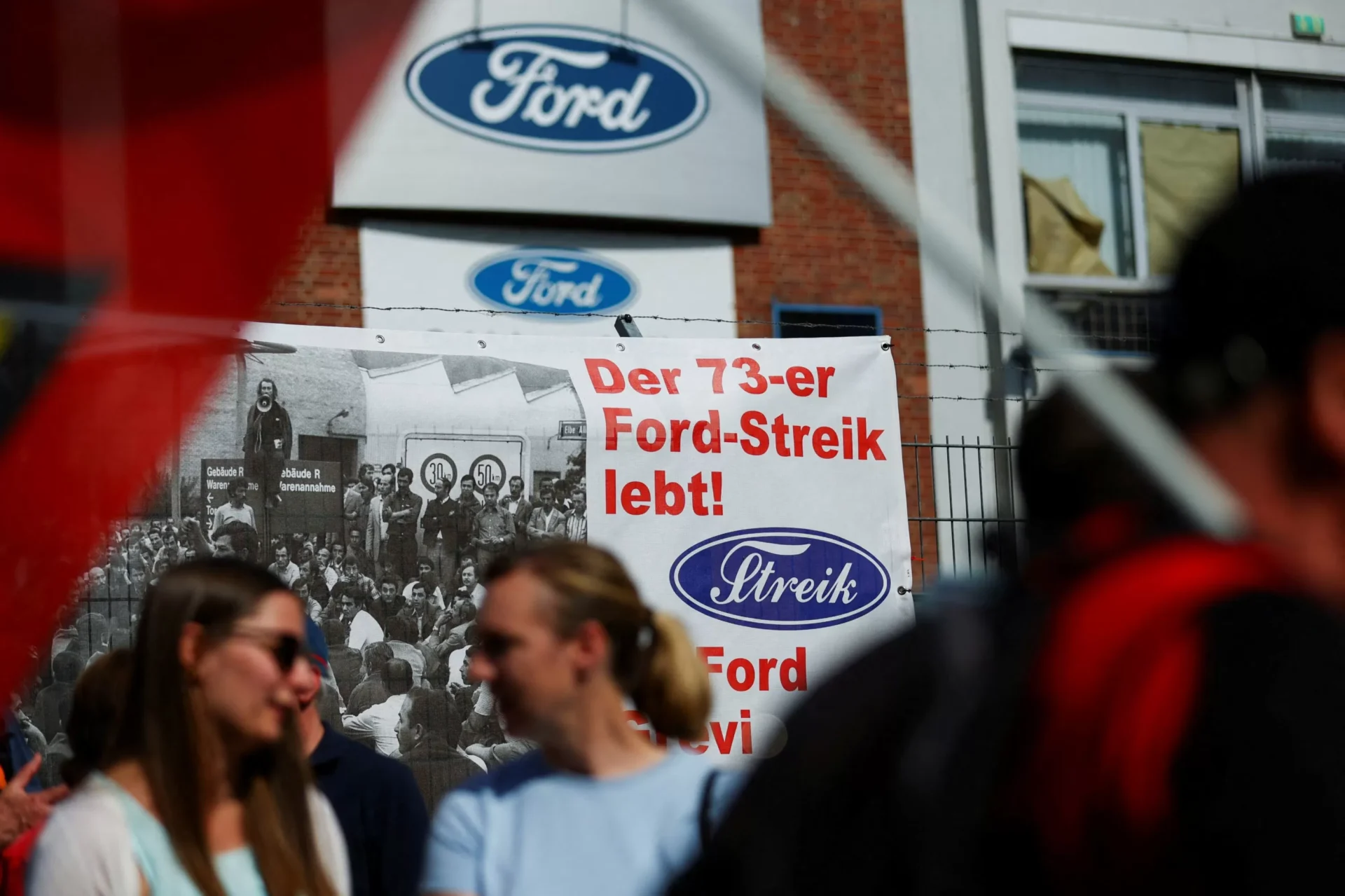
Ford workers at plants in the western German city of Cologne embarked on a historic first strike on Wednesday, halting production in a bold move to demand better working conditions and push back against aggressive cost-cutting measures by the company.
The strike, organized by the labor union IG Metall, saw thousands of workers at the Cologne plant walk off the job, effectively bringing production to a standstill. This marks the first time in 60 years that Ford workers in Germany have gone on strike, making it a significant event in the country’s labor history.
The workers have been engaged in negotiations with Ford over a new collective bargaining agreement, which sets out the terms and conditions of their employment. However, talks have stalled as the company has refused to meet the demands of the workers, who are seeking a 5% pay increase and a four-day workweek.
The strike has garnered widespread support from the public, with many expressing solidarity and admiration for the workers’ courage to stand up for their rights. It is a testament to the strength and unity of the labor union, as well as the determination of the workers, to fight for fair treatment and a better future.
The decision to go on strike was not an easy one for the workers, who have not received a pay increase in six years. They have also been subject to significant cost-cutting measures by the company, including job cuts and reduced benefits. This has caused frustration and resentment among the workers, who have been forced to bear the brunt of the company’s financial struggles while its executives continue to receive large bonuses.
The strike has had a significant impact on Ford’s operations in Cologne, with production at the plant largely coming to a standstill. This has sent a strong message to the company that the workers will not back down until their demands are met. The strike has also brought attention to the exploitative practices of the company, shining a spotlight on the need for fair and ethical treatment of workers.
In response to the strike, Ford has called for a “constructive dialogue” with the labor union, demonstrating the power and impact of collective bargaining. The strike has shown that when workers come together, they can effect real change and stand up against powerful corporations.
The historic first strike by Ford workers in Cologne has ignited a nationwide debate about fair working conditions and workers’ rights. It has also sparked discussions about the role of labor unions in protecting the rights of workers and ensuring a fair and just society.
The strike serves as a reminder that workers are the backbone of any company and deserve to be treated with dignity and respect. They are not just a means to increase profits, but valuable members of society who deserve fair compensation and a decent standard of living.
In conclusion, the Ford workers’ strike in Cologne is an inspiring display of solidarity and a powerful reminder that the rights of workers should not be taken for granted. It is a call to action for companies to treat their employees with fairness and respect, and for governments to enact laws that protect the rights of workers. Let us continue to support the brave workers at Ford and stand in solidarity with them as they fight for a better future.
