
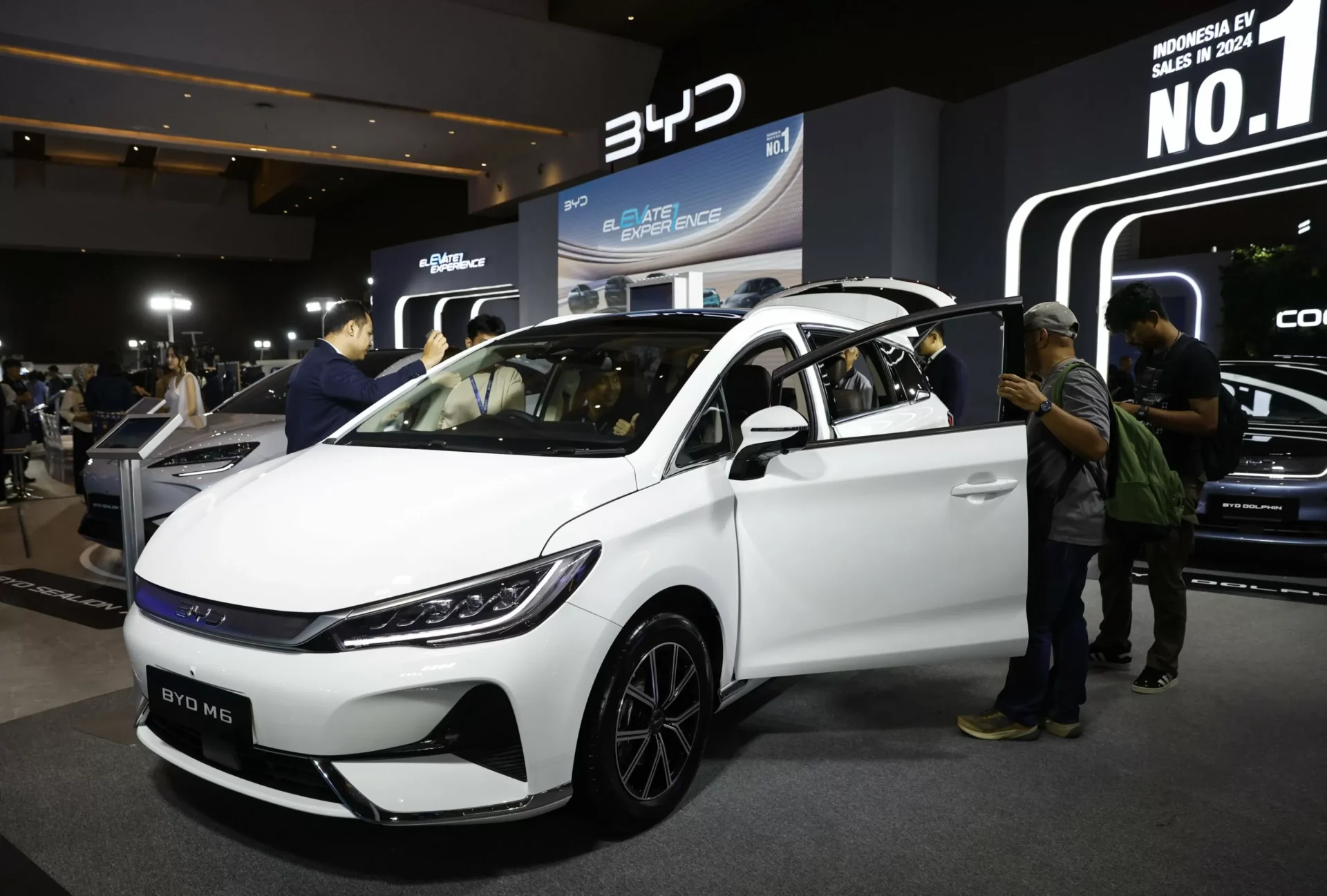
Shares in Chinese automakers, including BYD, Nio, and Geely, took a sharp dive on Monday after BYD, one of the industry’s leaders, announced new incentives for over 20 of its models. This move came on the heels of Great Wall Motor’s CEO, Wei Jianjun, expressing concerns about the current state of the Chinese auto market.
BYD, which is backed by Warren Buffett’s Berkshire Hathaway, announced that it will be offering discounts of up to 20,000 yuan (approximately $2,900) on its electric and hybrid vehicles. This move is seen as an attempt to boost sales in the wake of declining demand for cars in China. The incentives will be available on a range of models, including the popular Tang and Qin electric vehicles.
This announcement sent shockwaves through the market, causing shares in BYD to drop by 7%, while Nio and Geely also saw declines of 5% and 3%, respectively. This drastic reaction is a clear indication of the current state of the Chinese auto industry, which has been struggling with declining sales for the past year.
The CEO of Great Wall Motor, Wei Jianjun, also added to the market’s concerns by stating that the Chinese auto market is facing “tough times” due to a combination of factors including the ongoing trade war with the US, slowing economic growth, and changing consumer preferences. He also expressed worries about the potential impact of the government’s plans to reduce subsidies for electric vehicles.
However, despite these challenges, there is still hope for the Chinese auto industry. BYD’s move to offer incentives on its models is a clear indication of the company’s determination to weather the storm and continue its growth trajectory. The company has been a leader in the electric vehicle market in China, with its sales increasing by 38% in the first half of 2019.
Moreover, the Chinese government has also taken steps to support the industry by announcing plans to boost consumption and stimulate economic growth. This includes measures such as cutting taxes on car purchases and promoting the development of new energy vehicles. These initiatives are expected to provide a much-needed boost to the struggling auto market.
In addition, Chinese automakers have also been expanding their presence in international markets, providing a new avenue for growth. BYD, for example, has been making strides in the European market, with its electric buses gaining popularity in countries like the UK and Germany. This diversification can help mitigate the impact of the challenges faced in the Chinese market.
Despite the recent dip in share prices, experts believe that Chinese automakers, including BYD, Nio, and Geely, are well-positioned to weather the current challenges and emerge stronger in the long run. The Chinese auto market is still the largest in the world, and with the government’s support and the industry’s determination, it is expected to bounce back and continue its growth trajectory.
In conclusion, the recent decline in shares of Chinese automakers may be cause for concern, but it is not indicative of the industry’s long-term prospects. BYD’s move to offer incentives on its models and the government’s efforts to support the industry are positive signs that show the industry’s resilience and determination to overcome the current challenges. With a strong market, government support, and innovative companies like BYD leading the way, the Chinese auto industry is poised for a bright future.
